✍️ One Stop Roofing Pros
📅 March 13, 2026
⏳ 8 min read
🏷️ Materials Guide
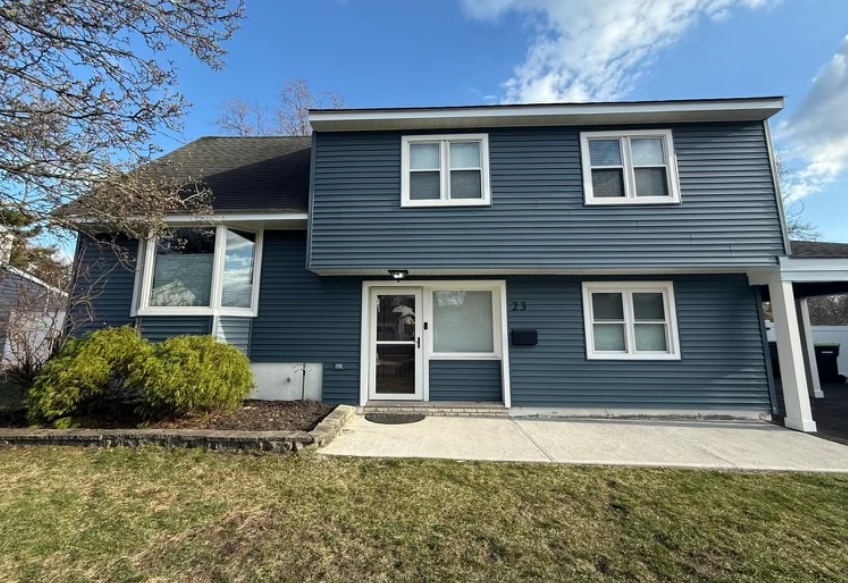
Coastal New Jersey is one of the most demanding environments for roofing materials in the entire country. You're dealing with salt-laden air blowing in off the Atlantic that corrodes metal flashing and accelerates asphalt degradation. You're dealing with wind events — from summer thunderstorms producing 60+ mph gusts to full nor'easters and the occasional tropical system — that test every shingle, every fastener, and every seal. You're dealing with temperature swings from 5°F in a January nor'easter to 95°F in August that cycle materials through expansion and contraction constantly.
After 30+ years installing roofing systems throughout Ocean County, Long Beach Island, and the surrounding barrier island communities, we've seen what lasts and what doesn't. This is our honest guide to the materials that make sense for NJ shore homes in 2026 — and the ones that don't.
#1 — Metal Roofing (Top Pick for LBI and Barrier Island Homes)
If you own a home on Long Beach Island, in Beach Haven, Harvey Cedars, Ship Bottom, or anywhere directly on or near the barrier island, metal roofing is our top recommendation. Nothing else on the market combines the wind resistance, salt-air durability, and longevity that aluminum or Galvalume steel standing-seam and metal shingle systems offer in a true coastal environment.
Aluminum vs. Galvalume Steel
Aluminum is the superior choice for homes within a mile of the ocean. It does not rust — period. Salt air that corrodes galvanized steel over time has no effect on properly coated aluminum. It's lightweight, handles thermal movement well, and carries a lifespan of 50+ years in coastal conditions. The trade-off is cost: aluminum is more expensive than steel.
Galvalume steel (zinc-aluminum alloy coated) is an excellent choice for homes further from the immediate shoreline — typically beyond a mile from open ocean. It offers exceptional strength and dent resistance, carries wind ratings of 140+ mph when properly installed with concealed fasteners, and costs less than aluminum. Its corrosion resistance is excellent in most NJ shore conditions, but in the harshest salt spray zones, aluminum is the safer long-term choice.
- Wind resistance: 140+ mph with standing seam concealed fasteners
- Lifespan: 50–70 years in coastal NJ conditions
- Salt air performance: Excellent (aluminum) to Very Good (Galvalume)
- Cost range: $18,000–$35,000 installed for a typical 1,500 sq ft home
- Insurance benefit: Many NJ insurers offer premium reductions for metal roofing
Long-term value: A metal roof installed today may well be the last roof your home ever needs. When you divide the cost over a 60-year lifespan, the per-year cost of metal frequently matches or beats architectural shingles that need replacing every 20–25 years.
#2 — GAF Timberline HDZ Architectural Shingles (Best Value)
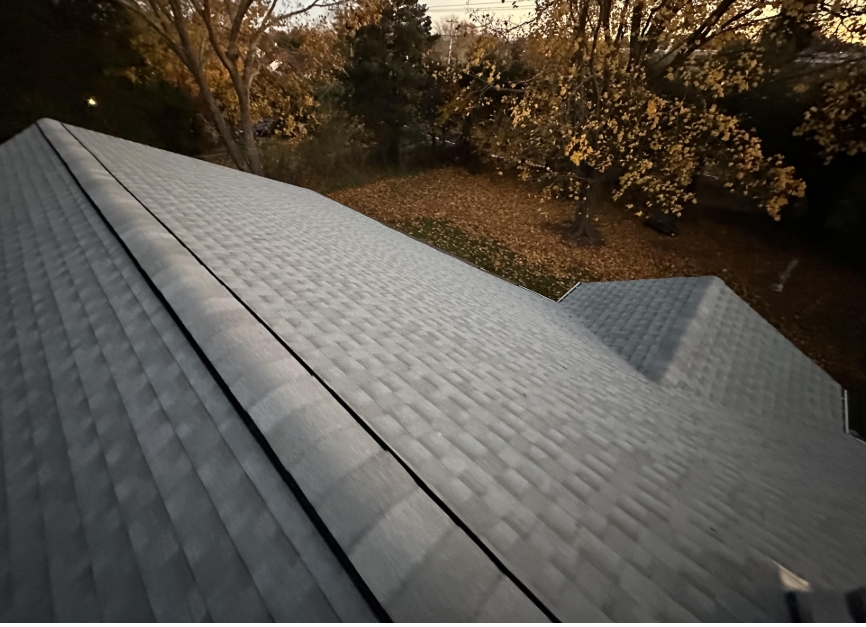
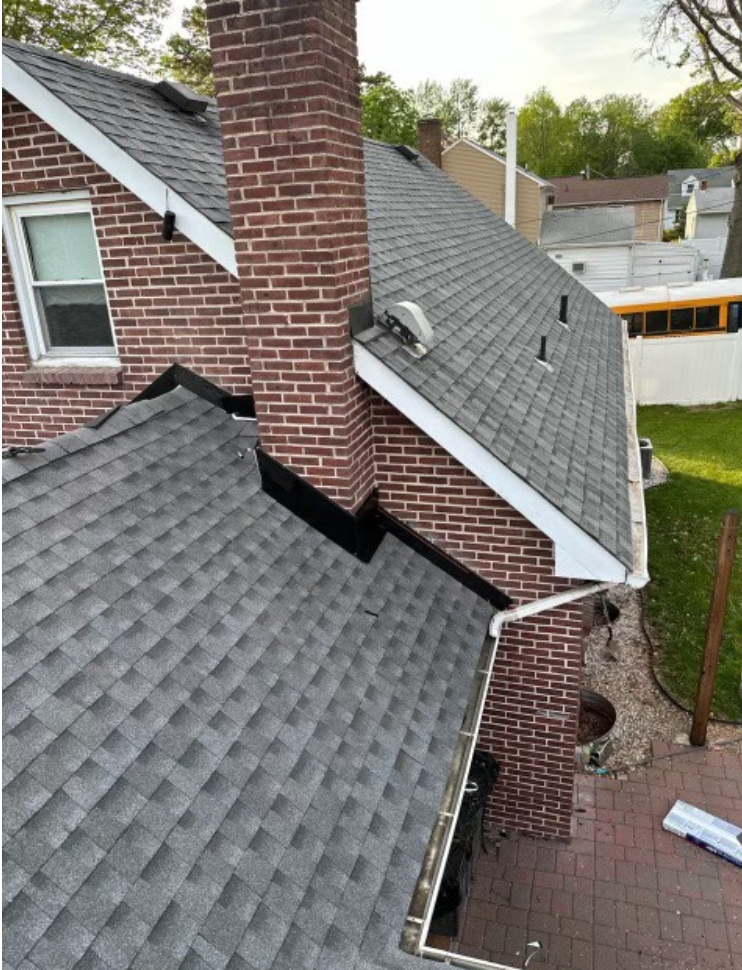
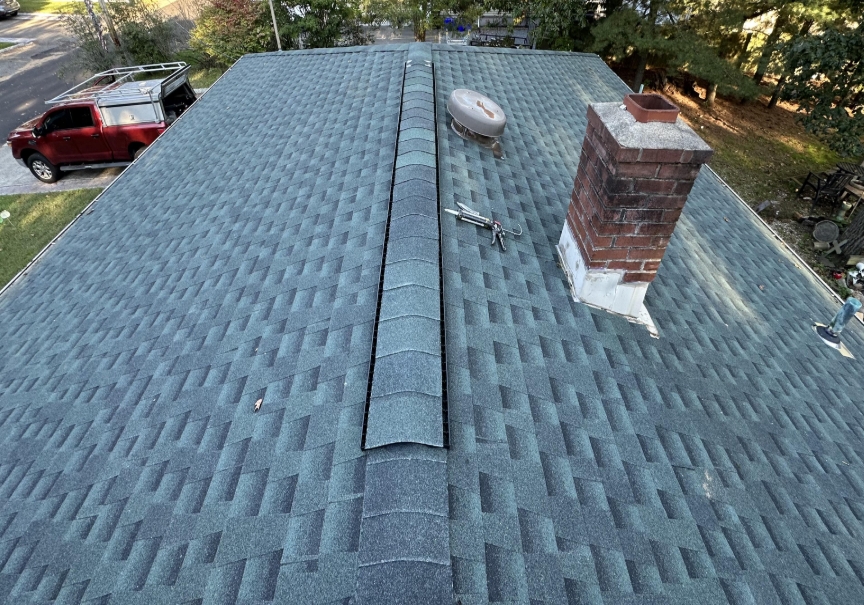
For the majority of Ocean County homeowners who want a proven, cost-effective solution that performs well in NJ's climate, GAF Timberline HDZ is our go-to recommendation in the architectural shingle category. The HDZ (High Definition) represents GAF's current flagship dimensional shingle and is a significant performance upgrade over older Timberline products.
Why HDZ Outperforms Standard Architectural Shingles
The critical technology for coastal NJ is LayerLock — a factory-applied adhesive sealant that bonds adjacent shingle layers together, dramatically improving wind resistance compared to traditional self-seal strips. GAF rates the HDZ at 130 mph wind resistance when installed per specifications, which is meaningful protection against the kinds of wind events Ocean County regularly experiences in nor'easters and summer storm systems.
The HDZ also offers Scotchgard Protector algae resistance, which addresses one of the most common complaints about asphalt shingles in humid, coastal NJ — the dark algae streaking that develops on north-facing slopes. Available in Class 4 impact-resistant versions (Timberline HDZ RS+) that may qualify for insurance discounts. Warranty options run up to lifetime for the shingles themselves with enhanced wind coverage.
- Wind resistance: 130 mph (with proper installation)
- Lifespan: 25–35 years realistic in coastal NJ (up to 50 yr warranty with Platinum coverage)
- Salt air performance: Good with algae-resistant coating
- Cost range: $9,500–$16,000 installed for a typical 1,500 sq ft home
- Best for: Inland Ocean County homes, budget-conscious replacements, standard residential
#3 — Synthetic Slate (Premium Look, Coastal Durability)
Synthetic slate — polymer-composite roofing tiles engineered to replicate the appearance of natural slate — has matured significantly as a product over the past decade and represents an excellent option for Ocean County homeowners who want a premium aesthetic without the structural demands and cost of genuine stone slate.
Products like DaVinci Roofscapes, CeDUR, and Brava deliver a virtually identical appearance to natural slate from street level. The key advantage in coastal NJ is weight: genuine slate weighs 800–1,500 lbs per square (100 sq ft) and often requires structural reinforcement of the roof framing. Quality synthetic slate weighs 100–150 lbs per square — comparable to architectural shingles — meaning no structural modifications are needed in most cases.
Polymer-composite materials handle freeze-thaw cycling, salt air, and UV exposure very well. Leading manufacturers offer 50-year warranties and Class 4 impact resistance ratings. For Ocean County homes with higher design standards — new construction, complete renovations, or historic-adjacent homes in communities like Tuckerton Borough — synthetic slate delivers genuinely compelling value.
- Wind resistance: 110–130 mph depending on product and installation method
- Lifespan: 40–50+ years with quality products
- Salt air performance: Excellent — polymer is inert to corrosion
- Cost range: $18,000–$28,000 installed for a typical 1,500 sq ft home
- Best for: Premium homes, design-focused buyers, areas where slate look is desired
What We DON'T Recommend for Coastal NJ
Choosing the wrong material for a shore environment isn't just a performance issue — it can affect your insurance coverage and the structural integrity of your home.
Wood Shake
Wood shake is genuinely not appropriate for most Ocean County applications. The combination of humidity, salt air, and the freeze-thaw cycle accelerates rot and splitting beyond what's manageable with normal maintenance. More significantly, many New Jersey homeowners insurance carriers refuse to write or renew policies on homes with wood shake roofing, particularly in coastal areas classified as wildfire-adjacent or high-wind zones. If a carrier does insure a wood shake roof, premiums are often substantially elevated. We almost never recommend shake in our service area.
Standard 3-Tab Asphalt Shingles
Three-tab shingles — the thin, flat single-layer shingles that were the industry standard through the 1990s — are wind-rated at only 60–70 mph under most manufacturer specifications. That is simply not adequate for coastal Ocean County, where nor'easters regularly produce sustained winds of 45–65 mph with gusts exceeding 80 mph. Three-tab shingles offer no meaningful advantage over architectural shingles in cost anymore, and they deliver dramatically inferior performance. We do not install three-tab shingles on any project.
Material Comparison Table
| Material |
Wind Rating |
Lifespan |
Salt-Air OK |
Cost Range |
Best For |
| Metal (Aluminum) |
140+ mph |
50–70 yrs |
Excellent |
$18K–$35K |
LBI / Barrier Island |
| GAF HDZ Shingles |
130 mph |
25–35 yrs |
Good |
$9.5K–$16K |
Most OC homes |
| Synthetic Slate |
110–130 mph |
40–50 yrs |
Excellent |
$18K–$28K |
Premium / Design |
| Natural Slate |
Variable |
75–100+ yrs |
Excellent |
$28K–$55K |
Historic / Luxury |
| Wood Shake |
60–80 mph |
15–25 yrs in NJ |
Poor |
$15K–$25K |
Not recommended |
| 3-Tab Shingles |
60–70 mph |
15–20 yrs |
Poor |
$8K–$12K |
Not recommended |
What About Solar Shingles?
Integrated solar shingles — products like Tesla Solar Roof — generate significant consumer interest, and we're asked about them regularly. Our honest assessment for NJ shore applications: we generally don't recommend them for coastal Ocean County homes at this time.
The core issues are threefold. First, salt air and salt spray accelerate degradation of photovoltaic cells and their weatherproofing seals — the very conditions that make our environment demanding for conventional materials are even harder on electronics embedded in a roofing system. Second, the cost-per-watt for integrated solar roofing remains significantly higher than conventional roofing plus separate solar panel systems, and the ROI timeline is poor for most NJ shore properties when compared to ground-mount or standard rack-mounted panels. Third, repair and replacement of individual solar shingles when they fail requires specialized contractors and leads to longer wait times than conventional roofing materials.
If solar is a priority, we recommend an excellent conventional roof as the foundation and a separate solar panel system designed for coastal conditions. That combination outperforms integrated solar roofing on every practical measure in our service area.
Not sure which material is right for your Ocean County home? Call One Stop Roofing Pros at (609) 204-3706. We'll assess your home's specific location, wind exposure, structural condition, and budget, and give you a recommendation we'd stand behind for our own home.
Get a Free Coastal Roofing Consultation
We install metal, architectural, synthetic slate, and specialty roofing throughout Ocean County and Long Beach Island. Licensed NJ#13VH13979300. 30+ years serving the shore.
Request Free Estimate
(609) 204-3706
Related Articles