✍️ One Stop Roofing Pros
📅 March 13, 2026
⏳ 8 min read
🏷️ Roof Replacement
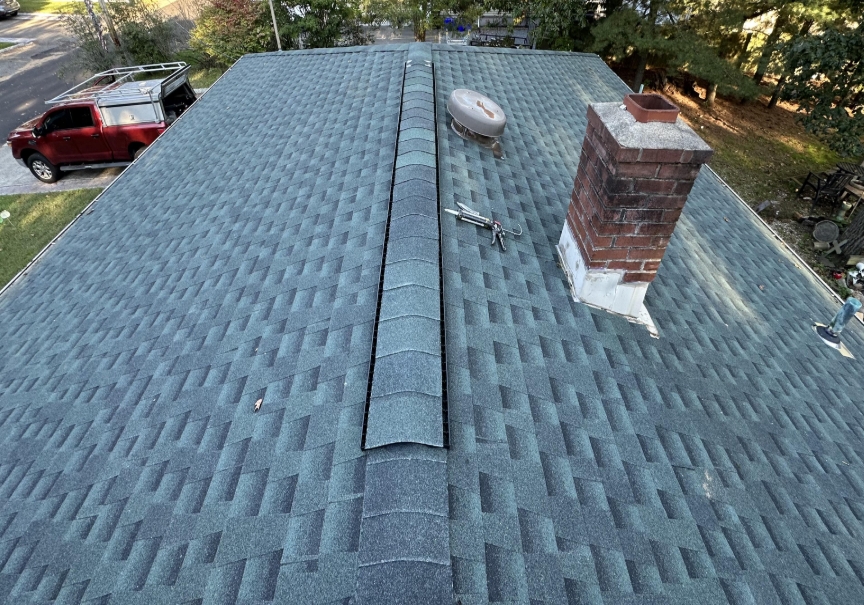
New Jersey's climate is genuinely brutal on roofing systems. We deal with freeze-thaw cycles that crack and split shingles through the winter months, nor'easters that drive rain under anything that isn't perfectly sealed, blistering summer heat that accelerates aging on south-facing slopes, and the relentless salt air that corrodes flashing and degrades asphalt compounds faster than inland homes ever experience. The result: NJ roofs work harder than almost anywhere else in the country.
Most homeowners discover they needed a new roof when water appears on their ceiling — by which point the damage extends well beyond the roof itself into decking, insulation, and sometimes structural framing. The signs are almost always there beforehand. Here are the nine you should never ignore.
Sign #1 — Your Roof Is 20–25+ Years Old
Age alone doesn't automatically mean replacement is needed, but it's the most reliable starting point for your assessment. Standard three-tab asphalt shingles installed in the 1990s and early 2000s have a realistic lifespan of 15–20 years in New Jersey's climate — meaning a three-tab roof from 2003 is already living on borrowed time. Architectural (dimensional) shingles carry a 25–50 year manufacturer warranty, but real-world performance in coastal NJ conditions often falls toward the lower end of that range without proper maintenance.
Metal roofing, natural slate, and synthetic slate all outperform asphalt significantly — 50 to 100+ years depending on the material. If your current roof is asphalt and has crossed the 20-year mark, a professional inspection is prudent even if it looks fine from the street. What you can't see from ground level is often what matters most.
Sign #2 — Curling or Buckling Shingles
Walk around your home on the next dry day and look at the shingle edges and surface from ground level. Cupping — where the edges of shingles turn upward — and clawing — where the middle of the shingle lifts while edges stay flat — are both signs of weathering and moisture imbalance between the shingle layers. After NJ winters, the freeze-thaw cycle accelerates this process dramatically on shingles that were already aging.
Buckled shingles — where wavy ridges run vertically up the roof — often indicate movement in the roof deck below, inadequate ventilation causing moisture buildup, or improper installation. Any of these scenarios leaves your roof significantly more vulnerable to wind uplift and water penetration. A few curled shingles in an isolated area may be repairable. Widespread curling across multiple roof planes means it's time for replacement.
Sign #3 — Granules Filling Your Gutters
Asphalt shingles are coated with mineral granules that protect the underlying asphalt from UV degradation and provide fire resistance. It's normal to see a small amount of granule shedding on new shingles. But if you're cleaning out your gutters and finding thick deposits of dark, sand-like granules — especially after rain — that's a sign your shingles are past their prime and actively breaking down.
Loss of granules accelerates the deterioration cycle: without the protective coating, UV rays attack the asphalt directly, causing it to dry out, crack, and become brittle. Bald patches on your shingles are visible evidence of this process. Check your downspout discharge areas after a heavy rain — significant granule accumulation is a reliable indicator that replacement is approaching.
Sign #4 — Daylight Through Your Attic Boards
This is the most urgent sign on this list and the one homeowners most commonly overlook because it requires going up into the attic. On a bright day, go into your attic and let your eyes adjust. If you can see pinpoints or streaks of daylight coming through the roof boards, you have openings large enough for water — and for pests. Mice, squirrels, and carpenter ants enter through gaps far smaller than you'd expect.
While you're up there, also check for water staining on the rafters and decking (dark streaks or discoloration), soft or spongy sections of decking when pressed, and any signs of mold or mildew growth. Active roof leaks in the attic space are often invisible from below until the insulation is saturated and water finally migrates through the ceiling drywall. By that point, you're looking at roof replacement plus interior remediation — a far more costly problem than addressing the roof alone.
Don't Wait: If you find daylight in your attic boards, contact a licensed roofer for an emergency inspection. This is not a watch-and-wait situation — one significant rain event can turn a manageable repair into a major water damage claim.
Sign #5 — A Sagging or Uneven Roof Deck
Step back and look at your roofline from across the street. It should be straight and true from ridge to eaves. A roofline that dips, sags, or looks wavy in the middle indicates structural problems with the decking, rafters, or both. This goes beyond a shingle issue — sagging typically means the wood beneath has been compromised by prolonged moisture exposure, rot, or in severe cases, structural overloading.
A sagging roof is a safety concern, not just a cosmetic one. In severe cases, the structural integrity of the roof can be compromised enough to create a collapse risk during heavy snow loads — which Ocean County gets periodically. This is always a replacement scenario, and often requires structural repairs beyond the roofing system itself.
Sign #6 — Moss, Algae, or Dark Streaks
Those black streaks you see on north-facing or shaded roof slopes aren't dirt — they're Gloeocapsa magma, an airborne algae that establishes colonies on roof surfaces and feeds on the limestone filler in asphalt shingles. While algae itself doesn't immediately destroy shingles, it traps moisture against the surface and creates the conditions that accelerate deterioration.
Moss is a more serious concern. Unlike algae, moss develops a root system that physically lifts shingles, allowing water to penetrate beneath them. Ocean County's humid summers and proximity to water create ideal conditions for moss growth, particularly on shaded north-facing slopes and under overhanging trees. Zinc or copper strips near the ridge can help prevent regrowth after treatment, but heavy moss growth on an already-aging roof is often the tipping point toward replacement.
Sign #7 — Flashing Failures Around Chimneys or Vents
Flashing — the metal strips that seal the transitions between roofing material and vertical surfaces like chimneys, walls, skylights, and vent pipes — is responsible for a disproportionately high number of roof leaks. In older homes, flashing was often installed with roof cement rather than proper step flashing and counter flashing, and that cement shrinks, cracks, and fails over time.
Visually inspect your chimney from the ground. If you can see gaps, lifted metal, rust staining, or dried and cracked caulk at the base of the chimney where it meets the roof, those are active or imminent leak points. Similarly, plastic pipe boots around vent penetrations crack and degrade from UV exposure — if your boots are more than 15 years old, have them inspected. Failed flashing on an otherwise sound roof can often be repaired without full replacement, but flashing that has failed on an aging roof is usually best addressed as part of a complete replacement.
Sign #8 — You've Had Multiple Repairs in the Last 3 Years
There's a reasonable limit to how much repair makes financial sense on an aging roof. If you've had your roofer out two or three times in recent years to patch this leak, address that vent boot, fix that flashing — and you're still calling — the roof has reached the end of its useful service life. You're spending repair money on a system that will continue to fail in new places.
A useful rule of thumb: if the cumulative cost of repairs over 3 years equals more than 25–30% of the replacement cost, replacement is almost certainly the better economic decision. You stop paying repair bills, you get a manufacturer warranty that covers material defects, and you get a workmanship warranty that backs the installation. The math typically favors replacement sooner rather than later.
Sign #9 — Your Energy Bills Are Climbing
A roof that is properly ventilated and insulated plays a significant role in your home's thermal performance. As roofing systems age and ventilation pathways become compromised — whether by damaged ridge vents, blocked soffit vents, or failing underlayment that no longer provides a thermal break — attic temperatures spike. In summer, a poorly ventilated attic in NJ can reach 150°F or higher, forcing your air conditioning system to work far harder than it should.
If your cooling costs have increased noticeably over recent summers without a clear explanation, and your roof is aging, the two may well be connected. A new roof with proper ventilation design and modern synthetic underlayment can meaningfully reduce attic heat gain. It won't replace adequate attic insulation, but the combination of a new roof and properly balanced ventilation is often the first step toward lower utility bills.
Repair vs. Replace — How We Decide
Not every roof problem requires full replacement. The right answer depends on age, the extent of the damage, and the condition of the underlying deck. Here's the guideline we use after 30+ years in Ocean County:
- If less than 10% of the roof surface is compromised and the roof is under 15 years old, targeted repair is almost always appropriate.
- If 10–25% of the surface is affected and the roof is 15–20 years old, the repair-vs-replace decision requires a detailed inspection to assess deck condition and the remaining useful life.
- If more than 25% of the roof is compromised — or if the deck has widespread moisture damage — replacement is virtually always the more cost-effective and durable solution. Patching a quarter of your roof while leaving aging, granule-depleted shingles on the rest simply delays the inevitable.
If you're seeing any of these nine signs on your Ocean County home, call One Stop Roofing Pros at (609) 204-3706 for a professional inspection. We'll give you a straight assessment — repair when repair makes sense, replacement when it doesn't. No upselling. No pressure.
Schedule Your Free Roof Inspection
Seeing any of these warning signs? Our licensed inspectors serve all of Ocean County NJ — Little Egg Harbor, Manahawkin, Tuckerton, Stafford Township, and beyond. We'll tell you exactly what's happening and what it will cost to fix it.
Book Free Inspection
(609) 204-3706
Related Articles