✍️ One Stop Roofing Pros
📅 March 13, 2026
⏳ 9 min read
🏷️ Storm Damage
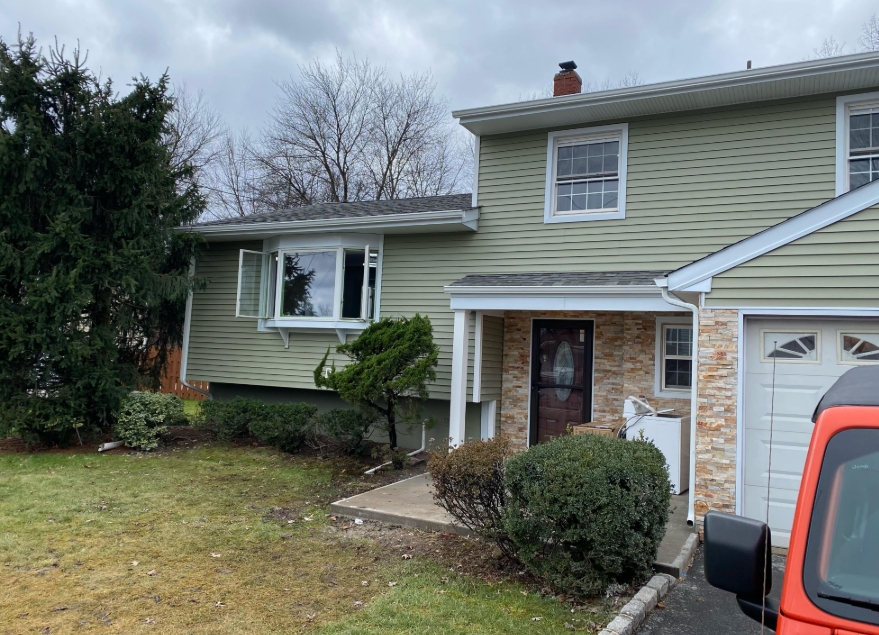
New Jersey gets hit hard. Nor'easters tracking up the coast bring sustained winds of 40–60 mph with gusts topping 80 mph, combined with driving rain that exploits any gap in your roofing system. Tropical systems push northward along the Jersey Shore with devastating frequency. Summer convective storms produce straight-line wind events and hail that dent aluminum gutters and crack shingles in minutes. And each winter, freeze-thaw cycles exploit damage that a fall storm started but didn't finish.
Your roof takes the brunt of all of it. When a storm event damages your home, the decisions you make in the first 24–72 hours have a material effect on your insurance claim outcome, the cost of repairs, and whether you end up with a legitimate local contractor or an out-of-state storm chaser who will be long gone before your first winter.
Here is exactly what to do — step by step.
Step 1 — Stay Safe, Stay Off the Roof
The immediate instinct after a storm is to get up on the roof and see what happened. Resist it. Storm-damaged roofing is genuinely dangerous to walk on: shingles that have been lifted, cracked, or saturated are slippery and structurally unpredictable. If tree limbs have come down on the roof, the decking beneath may be compromised. And if winds are still gusting — even at lower speeds during a storm's wind-down — being on a roof is not safe.
You can gather substantial documentation from the ground, from your attic, and from accessible second-floor windows. That's enough for your immediate purposes. Leave the roof surface itself to professionals with proper safety equipment.
Step 2 — Document Everything Within 24 Hours
Before anything else is touched — before tarps go up, before any cleanup begins — document the damage as thoroughly as possible. Insurance adjusters are trained to look for evidence that damage pre-existed the storm. Your timestamped photographs and video, created within hours of the storm, are your strongest evidence that damage is fresh.
- Ground-level exterior: Walk the entire perimeter of your home and photograph every face of the roof. Zoom in on missing or lifted shingles, damage to gutters, dented ridge caps, and any debris on the roof surface.
- Interior attic inspection: Take a flashlight into your attic as soon as it's safe. Photograph any new water staining on rafters or decking, any soft or wet insulation, and any pinpoints of daylight visible through the sheathing.
- Interior ceiling and walls: Walk through every room. Photograph any fresh water stains on ceilings, bubbling paint, or wet drywall — even if the damage seems minor. Water travels, and the stain may appear far from the actual entry point.
- Date and timestamp everything: Your phone's camera automatically timestamps photos. If you email images to yourself or upload to cloud storage, that further establishes the timeline.
Step 3 — Stop the Bleeding — Temporary Protection
If the storm opened a significant breach in your roof — missing shingles over a large area, a tree limb that penetrated the decking, or lifted flashing that's allowing direct water entry — you need emergency tarping before the next rain event. Don't wait for your insurance claim to process.
Emergency tarping by a qualified contractor typically costs $300–$600 depending on the roof area and accessibility. This cost is generally covered under your homeowners insurance policy as a "reasonable mitigation expense" — you're expected to take steps to prevent further damage once an event occurs. Keep the receipt and photograph the tarp installation.
Call us at (609) 204-3706 for emergency tarping throughout Ocean County. We respond quickly and document the work properly for your insurance file.
Step 4 — File Your Homeowners Insurance Claim in NJ
Once you have your documentation in hand, call your homeowners insurance company to open a claim. Have the following ready:
- The date and approximate time of the storm event
- A description of the damage you observed
- Your policy number
- Photos and video (you can send these digitally after the call)
In New Jersey, the standard statute of limitations for filing a storm damage claim is typically one year from the date of the storm event. Do not let this deadline pass — but also don't rush in without proper documentation. The first 24–72 hours are your window to build the strongest possible record.
Typical homeowners insurance deductibles in NJ range from $1,000 to $2,500 for standard wind/hail claims. Some policies — particularly on barrier island properties — carry separate wind or hurricane deductibles that may be calculated as a percentage of your home's insured value. Review your policy declarations page carefully and ask your agent to explain your specific deductible structure.
Step 5 — Get a Contractor Inspection BEFORE the Adjuster Visits
This is the step that most Ocean County homeowners skip — and it's often the most valuable thing they could do. Before your insurance adjuster arrives for their field inspection, have a licensed roofing contractor walk the roof and prepare their own written damage assessment.
Here's why this matters: your insurance adjuster works for the insurance company. Their job is to assess damage accurately — but "accurately" is subjective, and adjusters sometimes undercount storm damage items, miss secondary damage, or price materials and labor below actual contractor rates. When you arrive at that adjuster visit with a contractor's independent written inspection report in hand, you have documentation to support supplemental claims if the initial settlement offer is inadequate.
We provide written inspection reports for insurance purposes at no charge to Ocean County homeowners. Call us before your adjuster appointment.
Red Flags — Spotting Storm Chasers in NJ
After every significant storm event in Ocean County, contractors from Pennsylvania, Delaware, Maryland, and states far to the south drive into our communities within 24–48 hours. They canvas neighborhoods, knock on doors, and pressure homeowners to sign contracts immediately — often before the homeowner has even filed a claim or received their settlement.
Here are the red flags to watch for:
- Out-of-state license plates on work trucks and personal vehicles
- Pressure to sign a "direction to pay" or contract immediately — legitimate contractors do not require on-the-spot signatures
- No New Jersey contractor license number — ask for it directly; if they can't produce it, walk away
- No verifiable local address — a P.O. box or a freshly rented office space doesn't count
- "We'll waive your deductible" — this is insurance fraud in New Jersey, full stop
- Cash-only pricing with steep "discounts" for signing today
- No references in Ocean County — ask for three local references and call them
How to Verify a NJ Contractor Is Licensed
New Jersey requires all home improvement contractors to register with the Division of Consumer Affairs as a Home Improvement Contractor (HIC). This is a simple, free check that every Ocean County homeowner should perform before signing anything:
- Visit njconsumeraffairs.gov
- Navigate to "Verify a License / Registration"
- Search by contractor name or registration number
- Confirm the registration is active and the business address is legitimate
One Stop Roofing Pros is registered with the NJ Division of Consumer Affairs. Our license number is NJ#13VH13979300. We are based in Little Egg Harbor and have maintained a continuous, verifiable presence in Ocean County for over 30 years.
Timeline — From Storm to New Roof
Understanding the realistic timeline helps you plan and avoids the anxiety of feeling like nothing is happening:
- Day 1–3: Damage documentation, emergency tarping if needed, claim filing
- Days 3–14: Contractor inspection, adjuster visit, initial insurance estimate issued
- Days 14–28: Review settlement offer, negotiate supplements if needed, accept settlement
- Days 21–35: Material ordering, scheduling — premium materials may have 2–4 week lead times
- Days 28–56: Roof installation (1–3 days for typical residential job)
- Post-installation: Final invoice, recoverable depreciation (RCV) released by insurer, permit close-out
Total timeline from storm to completed new roof: typically 4–8 weeks for an average residential project in Ocean County. Complex jobs, supplemental claim negotiations, or material supply constraints can extend this. We communicate with homeowners throughout the process so nothing comes as a surprise.
Warning: Never hire an unlicensed contractor for storm damage repairs, no matter how attractive the price. If the work fails, you have no warranty recourse. If they're injured on your property, you may be liable. And if the work doesn't meet code, you could face issues when you sell or refinance. Always verify NJ licensure at njconsumeraffairs.gov before signing anything.
Storm Damage? Call Us First.
We've helped hundreds of Ocean County homeowners navigate storm damage claims with honesty and expertise. Licensed NJ#13VH13979300. 30+ years local. Emergency tarping available.
Request Storm Inspection
(609) 204-3706
Related Articles